There is a word we use in Japanese — 忙しない (sewashinai) — for a place that never stops moving. Rei-chan was like that. Ten seats, maybe. A counter, a huge iron griddle, and a cook who had no time for you except to make sure you ate well. It was inside the old Hiroshima station building, which no longer exists. Neither does Rei-chan. I took every visitor there. I never once had to explain why.
That is okonomiyaki.
What it actually is
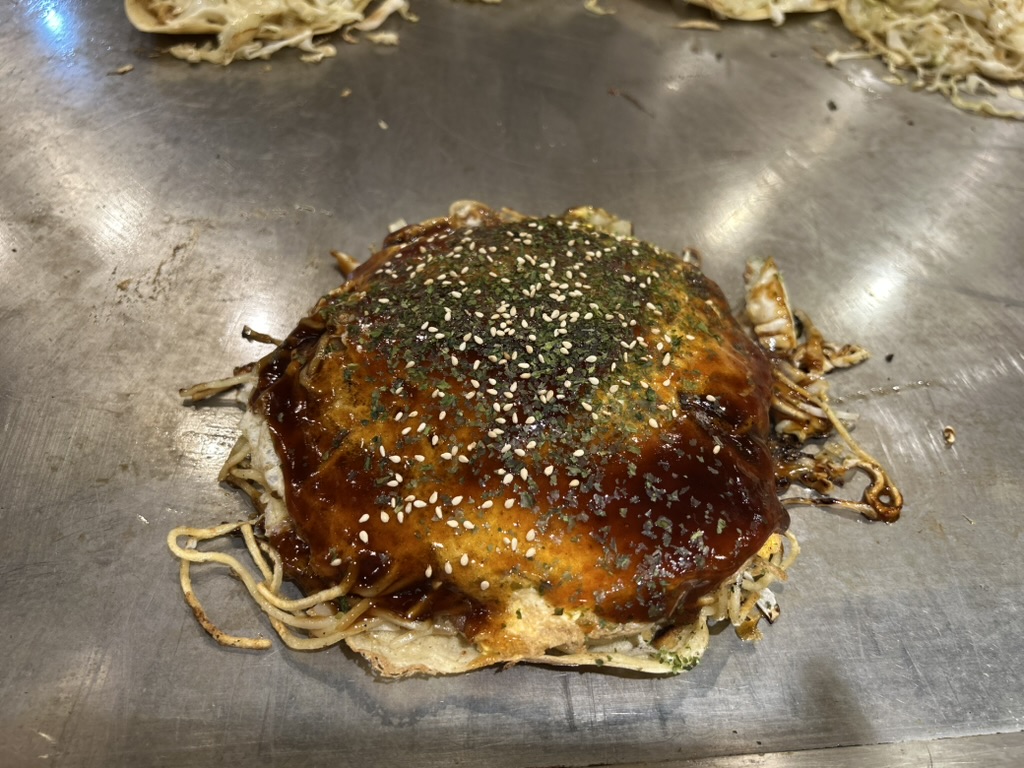
Hiroshima okonomiyaki is layered, not mixed. That is the first thing to understand, and the thing that makes it different from what you may have eaten elsewhere in Japan.
A thin crêpe-like batter goes down first on the iron griddle. Then come the vegetables — a mountain of cabbage, bean sprouts — then noodles, then a fried egg, then meat or seafood, all pressed together and flipped. What comes to your table looks almost too large to be one portion. It is. It is also mostly vegetables, which means it digests faster than you expect, which means you will be hungry again sooner than you planned. This is not a warning. This is useful information.
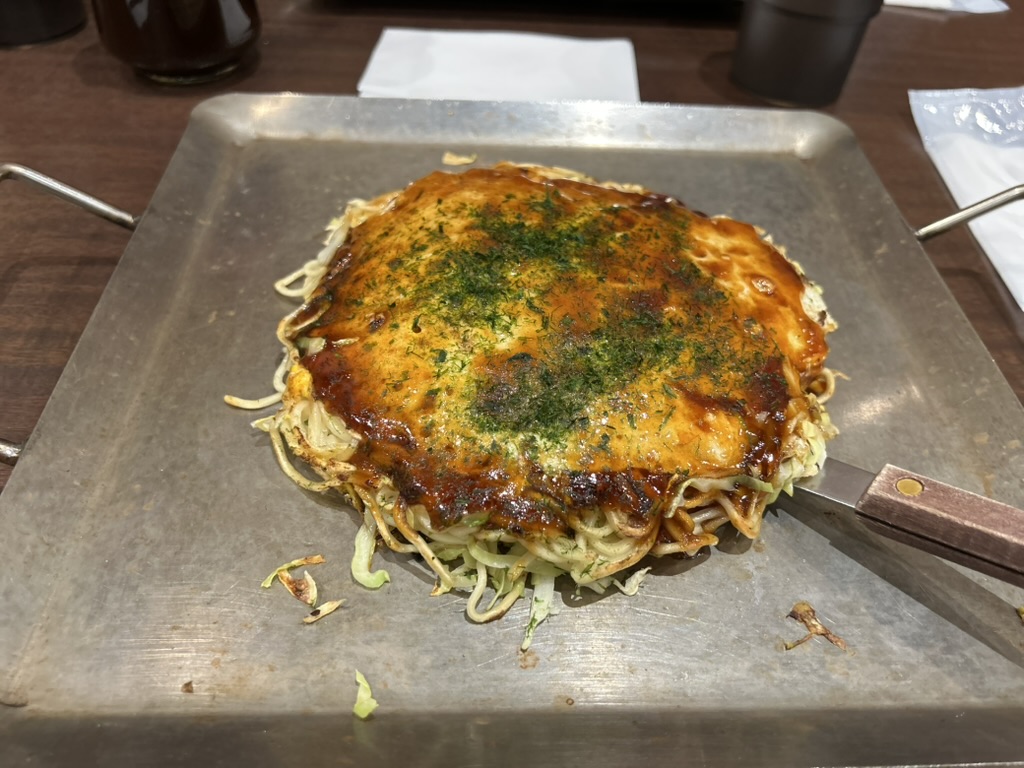
My mother made it at home on a ホットプレート (hotto purēto) — the flat electric griddle that sits on the kitchen table. She never made just enough. She made more than enough, so there would be some left for the next day. I did not understand as a child that this was a form of generosity. I understand now.
About the name — a small but important matter
This food is called お好み焼き (okonomiyaki). If I want to specify the style, I say 広島風お好み焼き (hiroshima-fu okonomiyaki) — Hiroshima-style okonomiyaki.
It is not called 広島焼き (hiroshimayaki).
I want to say this gently, because I have no particular wish to argue about it. But if I walk past a restaurant and see 広島焼き on the sign, I will probably not go in. If I am already inside and I see it on the menu, I will likely not return. This is not anger. It is something quieter than that — the mild, sustained disappointment of hearing your city's food called by the wrong name.
You, as a visitor, do not need to worry about this. You just need to know that the people of Hiroshima notice.
On Osaka okonomiyaki — a fair account
Osaka okonomiyaki mixes everything together before cooking. I have eaten it. It is good. Osaka-style has its own place in the world.
My only observation — and I offer it without hostility — is that when everything is combined from the start, it becomes harder to taste what is actually in it. In Hiroshima okonomiyaki, the layers stay distinct. You taste the cabbage, the noodle, the egg, the meat, each in its own moment. The whole is the sum of its parts, and you can tell what the parts are.
That is all I will say on the matter.
Tokyo and Los Angeles
When I lived in Tokyo, I could not find Hiroshima-style okonomiyaki easily. I remember feeling genuinely sad about this — not homesick exactly, but aware of an absence. Every time I came back to Hiroshima to visit, eating it was one of the first things I did. I remember thinking: I am glad I was born here. That is what this food does to me.
In Los Angeles, there was a place that served it. I went many times. It was not Rei-chan, and it was not Hiroshima, but it was something. You hold onto what you can.
"If you have not eaten Hiroshima okonomiyaki yet, you are missing something considerable."
If you have not eaten Hiroshima okonomiyaki yet, you are missing something considerable. I say this without exaggeration.
How to eat it
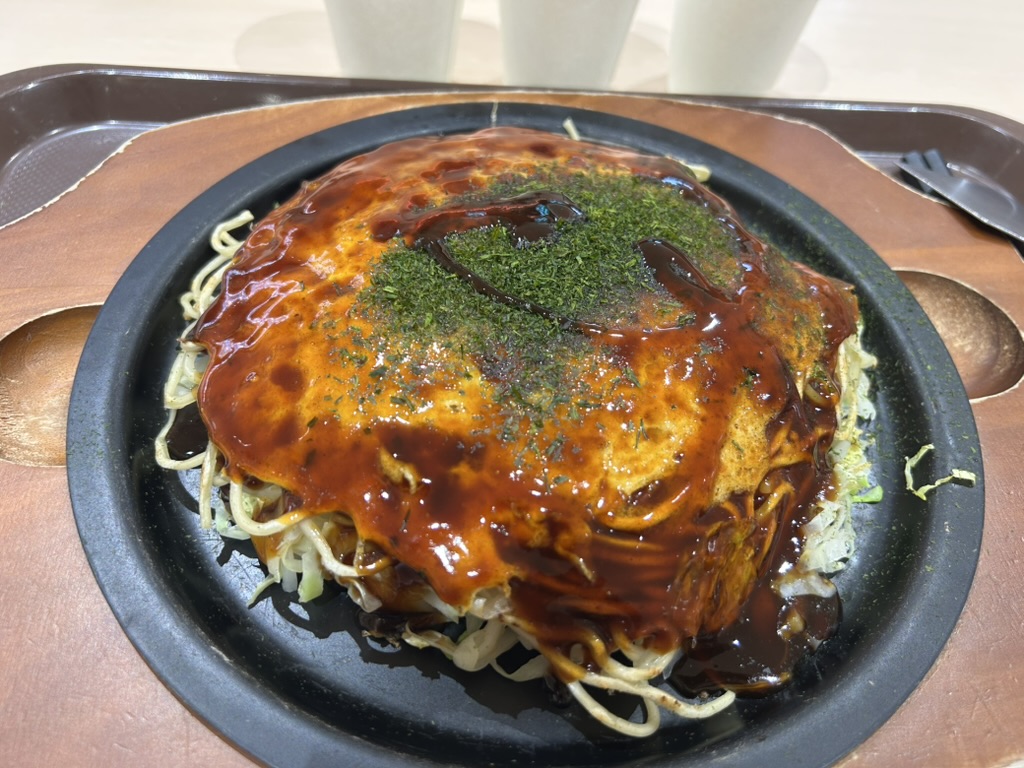
The sauce matters. Do not treat it as optional or decorative — apply it properly and it changes everything. There is usually more than one sauce available. Try them.
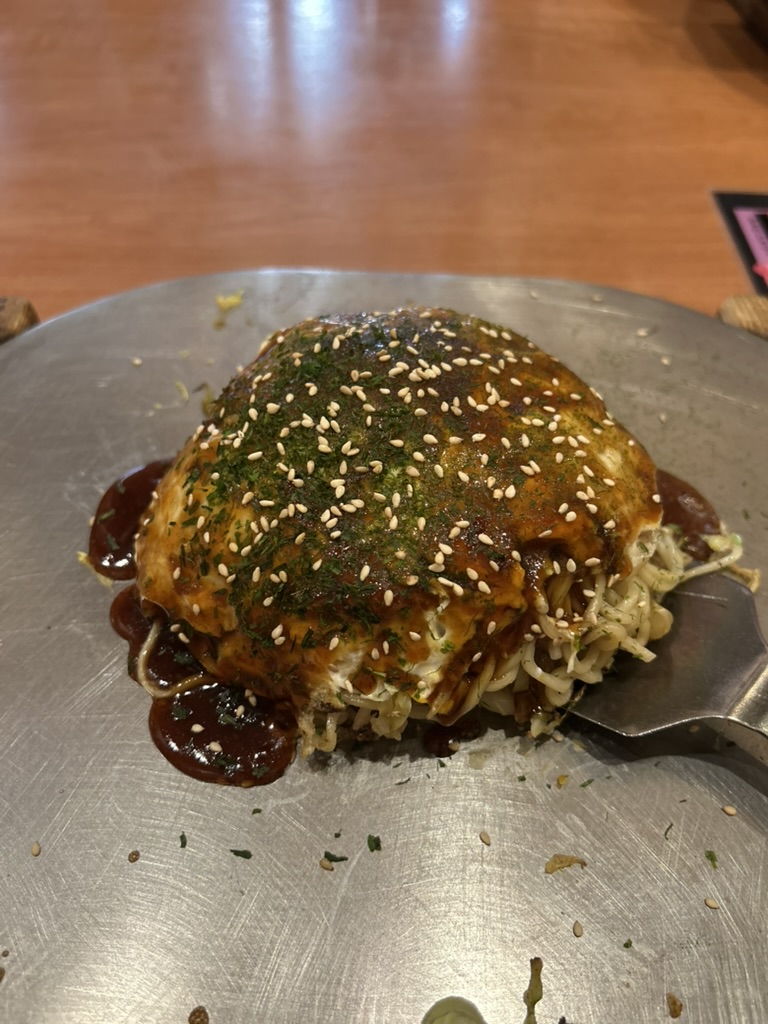
Eat it on the teppan if you can — either at the counter where it is cooked on the large griddle, or on the small individual iron plate it arrives on. It keeps the food warm for longer, and warm is how it should be eaten.
Do not be frightened by the size. Eat slowly. You will be fine.
One last thing
If I were walking you to my favourite okonomiyaki place right now, here is what I would say as we arrived at the door:
I hope you are hungry and excited!