Every visitor to Hiroshima follows the same path. The Peace Memorial in the morning, the A-Bomb Dome at noon, a quick ferry to Miyajima in the afternoon. They take the same photographs, visit the same sites, and leave having seen — genuinely — only a fragment of what this city holds.
I live here. I know the city the way you only can when you've been walking the same streets for years. These ten places are the ones I'd take a friend who wanted to see something different — not the face Hiroshima shows to the world, but the one it keeps for the people who take the time to look.
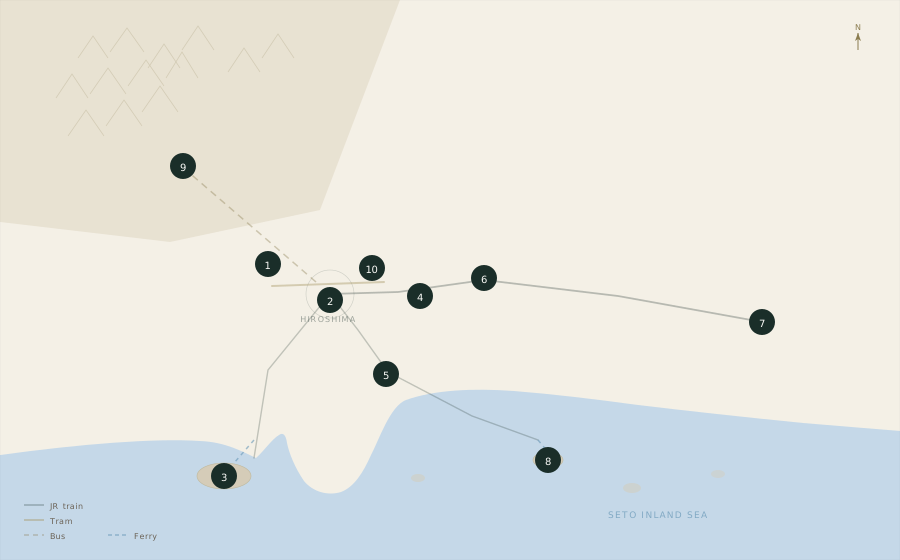
Numbers correspond to the ten spots below.
01Mitaki-dera Temple
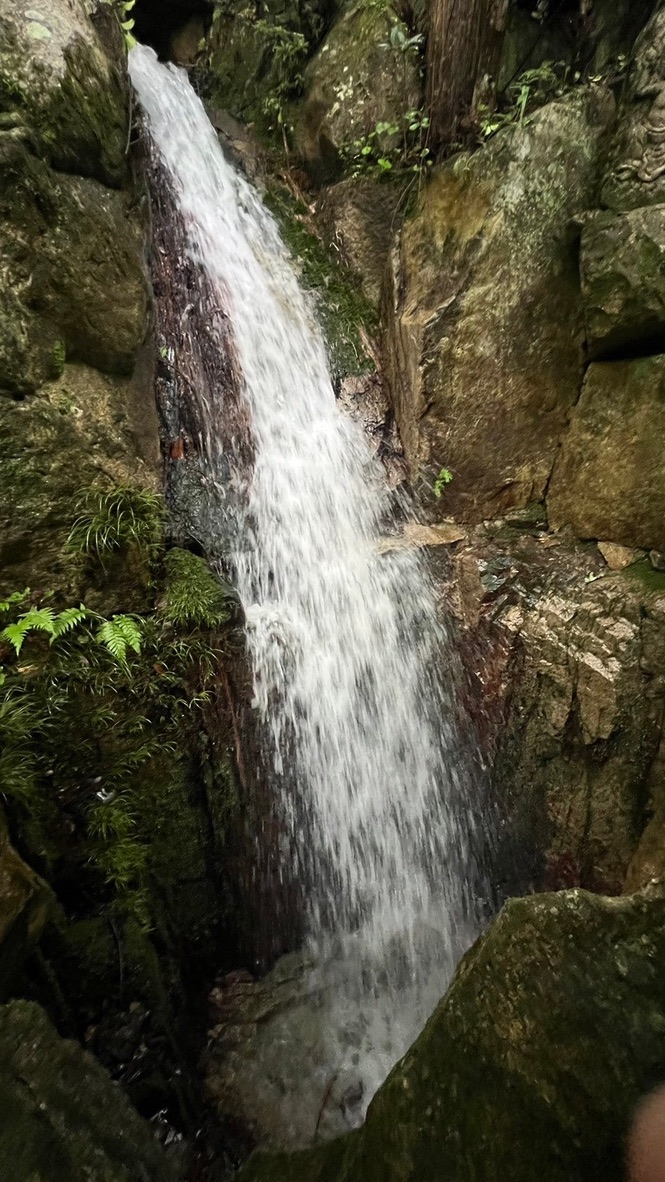
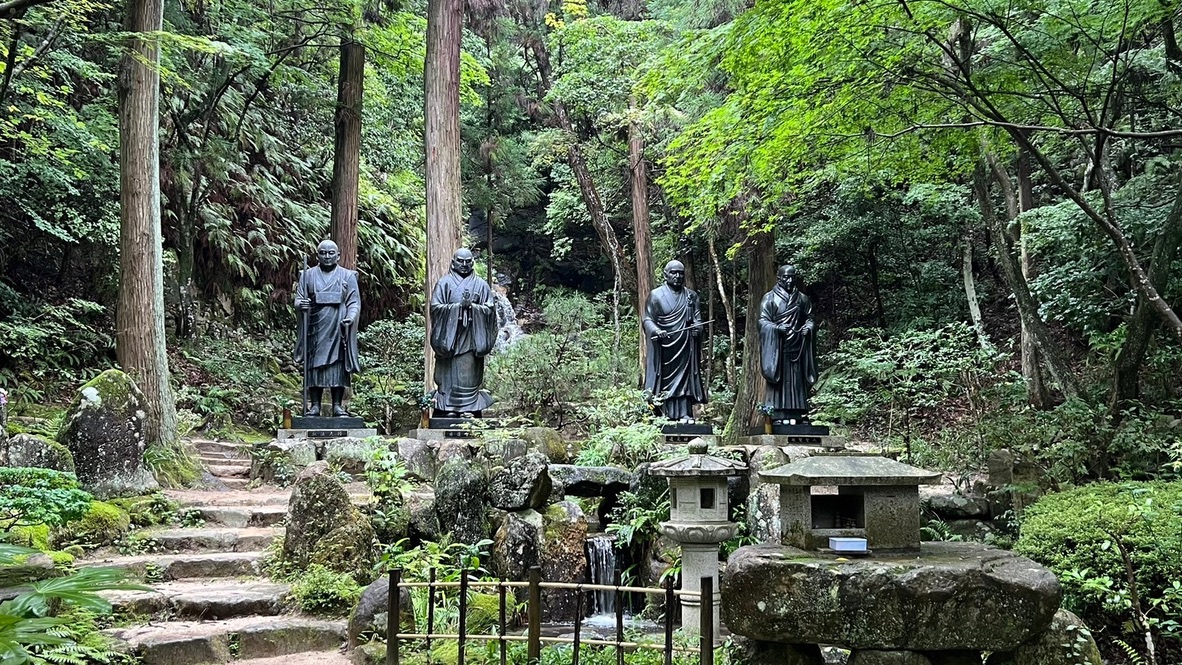
Most people know Hiroshima's temples by their famous names — Itsukushima, Daisho-in. But thirty minutes by tram from the city centre, up a forested hillside in Nishi Ward, sits a temple that almost no tourists visit. Mitaki-dera was founded in 809, deep in a gorge where three waterfalls (三滝 — mitaki means "three waterfalls") cascade through a forest of moss-covered stone and ancient cedar.
"I've been here dozens of times and I have never, not once, been crowded."
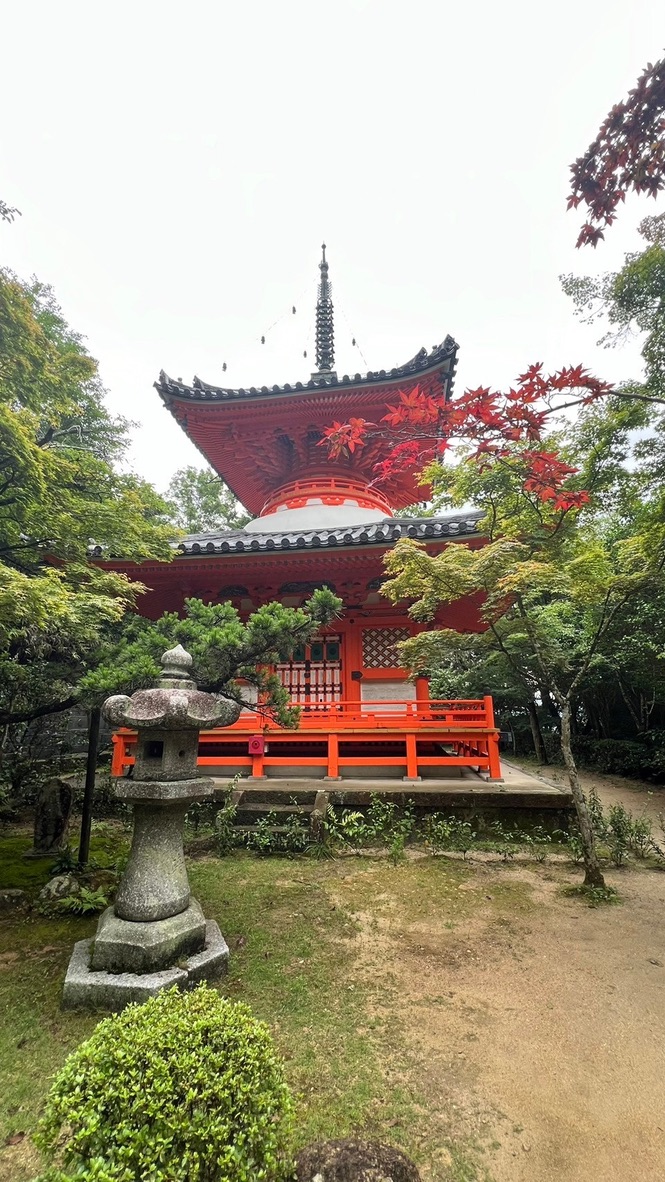
You reach it on foot from Mitaki Station — a ten-minute walk along a path lined with stone lanterns and small Jizo statues. In summer, the shade of the forest makes the air noticeably cooler than the city below. In autumn, the maples turn red and gold in layers that feel almost theatrical. I've been here dozens of times and I have never, not once, been crowded.
There's something about the combination of running water, old stone, and near-silence that resets something in you. This is the temple I come to when I need to breathe.
Cost — Free (donations welcomed)
Best time — Early morning in any season. Autumn (mid-November) for the maples.
Time needed — 1–2 hours
Links — Visitor info ↗ · Google Maps ↗
02A Hiroshima Toyo Carp game
Hiroshima has a relationship with its baseball team that is genuinely difficult to explain to someone who hasn't seen it. The Hiroshima Toyo Carp — named for the carp, a symbol of perseverance in Japanese culture — are the city's closest thing to a collective heartbeat. On match days, the streets around Mazda Zoom-Zoom Stadium fill with red: red jerseys, red flags, red hats, red everything.
"The crowd doesn't just watch the game — it performs."
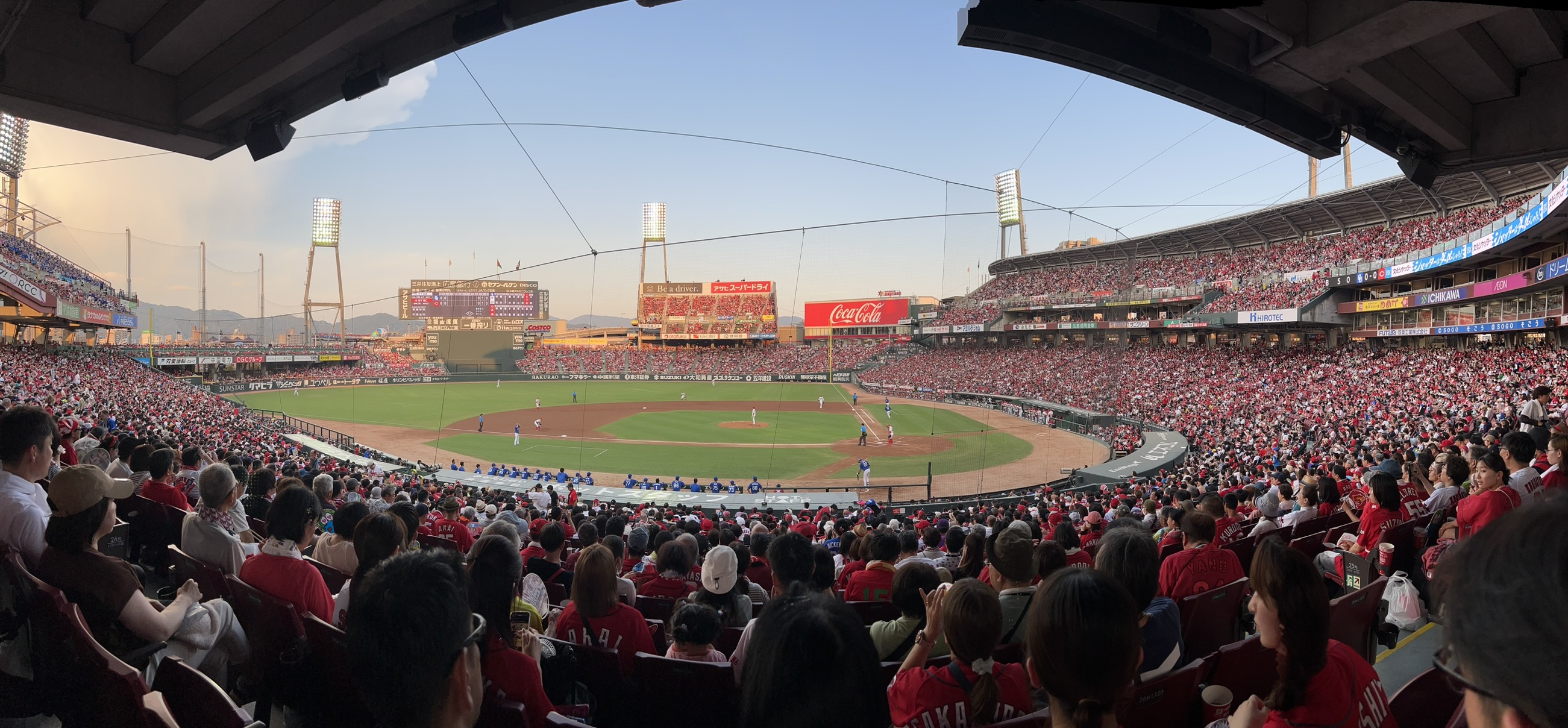
The crowd doesn't just watch the game — it performs. Coordinated chants, synchronized clapping, brass band sections in the stands, and at the seventh inning stretch, the release of thousands of red balloons into the night sky. It doesn't matter if you've never watched baseball in your life. The atmosphere is unlike anything I've experienced in a stadium anywhere. The venue itself is beautiful — open-air, right on the Motoyasu riverbank, with the city visible beyond the outfield.
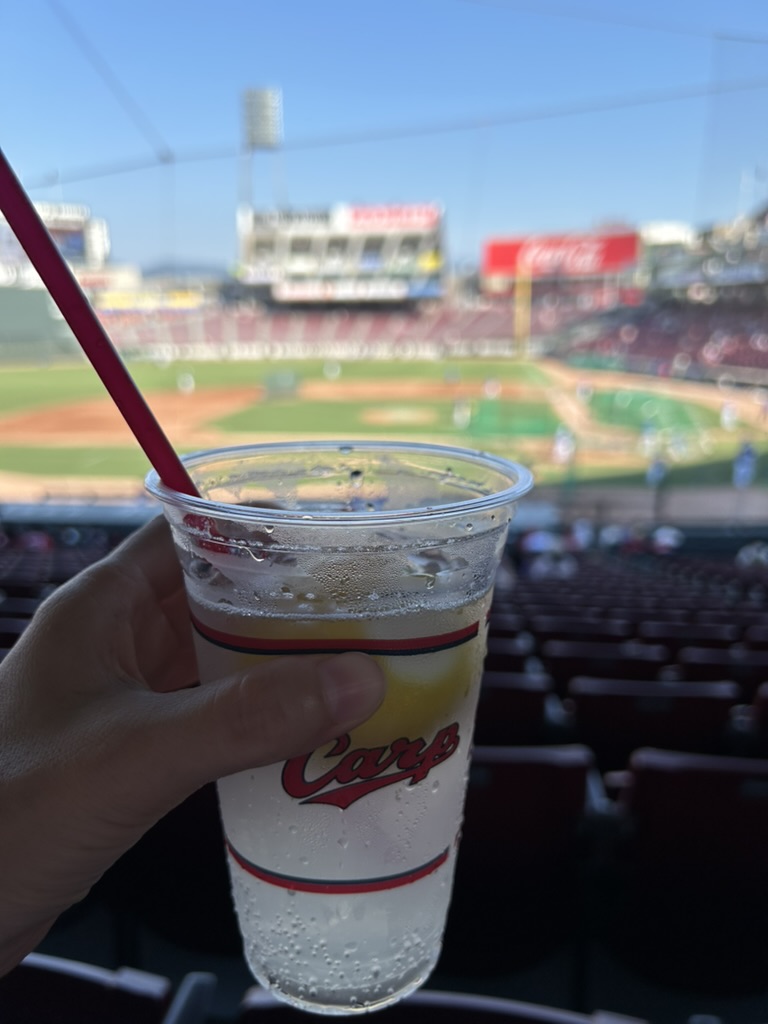
Hiroshima also has four other professional sports teams worth knowing about. Sanfrecce Hiroshima play in the J1 League (football). The Hiroshima Dragonflies won the B.League championship in 2024 and the East Asia Super League in 2025 — they are currently one of Asia's strongest basketball teams and the atmosphere at their games is electric. JT Thunders Hiroshima play volleyball in the SV League, and Skyactivs Hiroshima (Mazda-sponsored) play in Japan Rugby League One. For a city of its size, the depth of professional sport here is remarkable.
Tickets — From ¥1,500 (outfield) to ¥4,500+ (reserved). Popular games sell out fast.
Season — March–October for baseball. Check each team's official site for other sports.
Time needed — 3–4 hours for a full game
Links — Official site ↗ · Buy tickets ↗ · Google Maps ↗
03Daisho-in Temple, Miyajima
Almost everyone who visits Miyajima sees the floating torii gate and the Itsukushima Shrine. Almost no one walks the extra ten minutes uphill to Daisho-in.
"Almost no one walks the extra ten minutes uphill to Daisho-in."
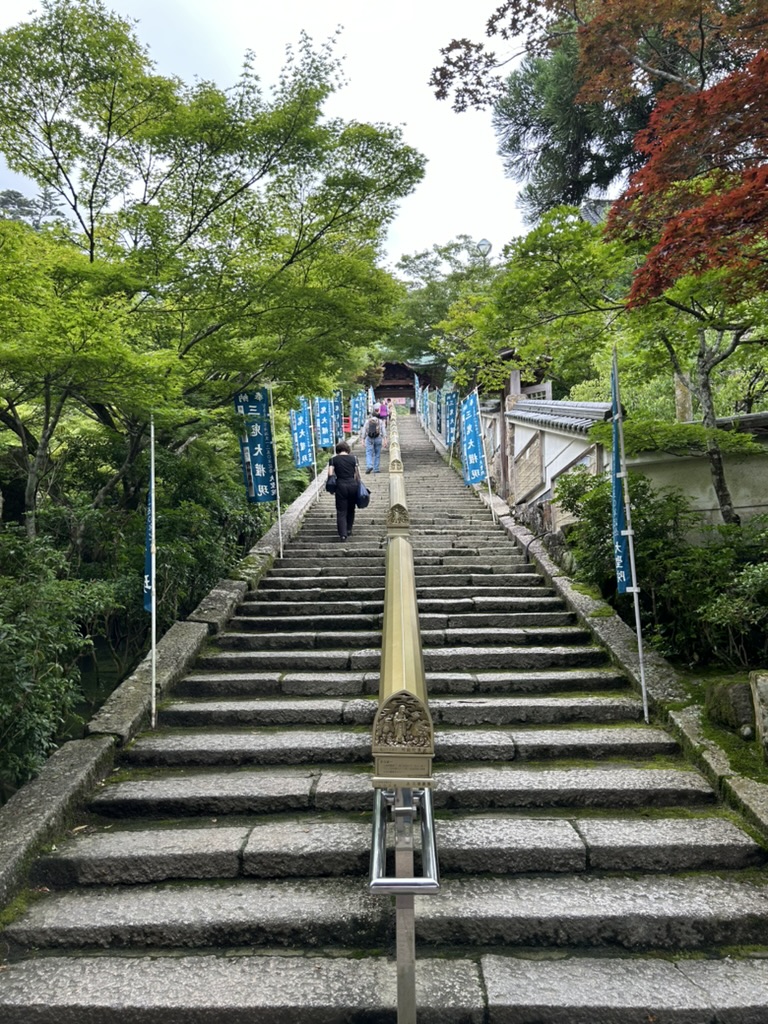
This is one of the most quietly atmospheric Buddhist complexes I know. You climb stone steps past hundreds of small Jizo statues — each wearing a knitted red hat, placed there by worshippers over the years — and enter a series of halls filled with sand mandalas, hanging lanterns, and the smell of cedar and incense. On the way up, a covered corridor of prayer wheels invites you to spin each one as you pass. The sound they make together is something you don't forget.
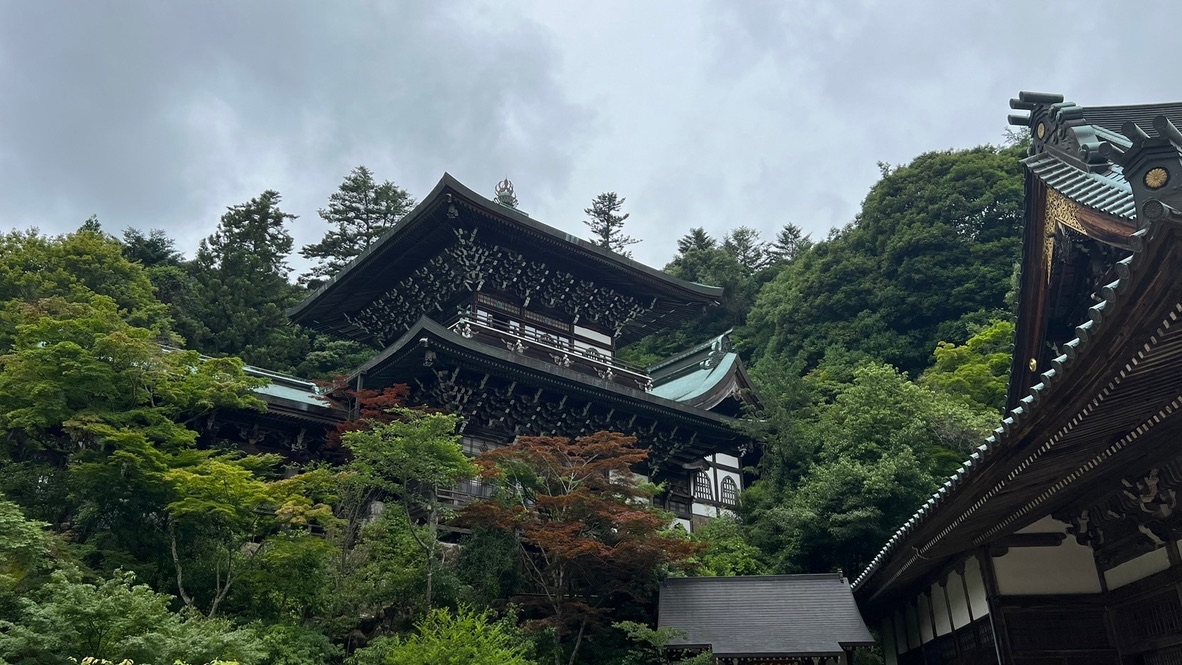
In the main hall, there are intricate mandala murals painted in gold and deep red. In spring, cherry blossoms fall slowly over the stone courtyard below. In autumn, the maple trees inside the complex turn every shade of red and orange. It's ten minutes from the main shrine and almost always calm.
Most tourists who visit Miyajima allow three to four hours. Add one more, and come here.
Cost — ¥300 adults
Open — Daily, 8am–5pm
Time needed — 45–90 minutes
Links — Official site ↗ · Google Maps ↗
04The Mazda Museum
Hiroshima was, in a real sense, built by Mazda. The automaker's global headquarters and main production factory are here, right in the city, and you can tour both — for free — with an advance reservation.
"It sits on display still wearing its orange and green livery, looking as though it might start at any moment."
The museum inside the factory complex is a fascinating place. There are exhibits on the rotary engine — which Mazda invented and has never stopped believing in, even when every other manufacturer abandoned it — and a working assembly line you can watch from overhead walkways. But what always stops me, in a corner of the exhibition hall, is the Mazda 787B: the rotary-engine race car that won the 24 Hours of Le Mans in 1991. The only Japanese manufacturer ever to win that race. It sits on display still wearing its orange and green livery, looking as though it might start at any moment.
The tour takes about 90 minutes. English-language guided tours run on weekday afternoons. Book ahead — spots fill up, especially in spring and autumn.
Cost — Free
Reservations — Required in advance. ID required at the gate.
Time needed — About 90 minutes
Links — Official site ↗ · Book a tour ↗
05Kure — the naval city
Thirty-five minutes south of Hiroshima by train, Kure was once Japan's most powerful naval base. The battleship Yamato — the largest battleship ever built — was constructed and launched here in 1940. Most tourists never come. They should.
"This is a different layer of wartime history to the Peace Memorial — equally important, and rarely visited by foreign tourists."
The JMSDF Kure Museum, known locally as the Yamato Museum, tells the history of Japanese naval technology from the Meiji era through World War II and into the present. The centrepiece is a 1:10 scale model of the Yamato — ten metres long, extraordinarily detailed, and unexpectedly moving. Outside the museum, you can board a decommissioned submarine and walk through its cramped interior. It puts something in you that photographs don't quite convey.
The city itself is charming in the way quiet Japanese port towns often are: covered shopping arcades, old sweet shops, a harbour front where you can sit and watch the water. This is a different layer of wartime history to the Peace Memorial — equally important, and rarely visited by foreign tourists.
Yamato Museum — ¥500 adults. Closed Tuesdays. Open 9am–6pm.
Submarine (Tecr Museum) — Free admission.
Time needed — Half a day
Links — Official site ↗ · Google Maps ↗
06The sake breweries of Saijō
Forty minutes east of Hiroshima by train, Saijō is Japan's other great sake region — less well-known than Nada or Fushimi, but equally good, and far more personal. The Sakagura-dōri district has eight working breweries within easy walking distance of the station. Their chimneys line up against the sky in a row that looks like something out of an old woodblock print.
"I prefer it cold, in autumn, with the smell of fermenting rice in the air."
Most breweries open their shops to visitors and offer free tastings. You walk in, they pour, you drink, and you buy if you like what you find. Some have small museums attached — histories of local sake-making going back centuries. The sake itself, made with the soft groundwater of the Saijō basin, is known for being light and clean on the palate. I prefer it cold, in autumn, with the smell of fermenting rice in the air.
In October, the Saijō Sake Festival turns the entire district into a vast open-air tasting event. Breweries set up stalls, crowds arrive from across Japan, and the atmosphere becomes something between a village festival and a very civilised party. It's one of my favourite days of the year.
Cost — Free to walk and taste (purchasing optional)
Best time — October for the Sake Festival. Year-round otherwise; most shops open 9am–5pm.
Time needed — 2–4 hours
Links — Tourism info ↗ · Google Maps ↗
07Tomonoura — the harbour Miyazaki drew
About 90 minutes from Hiroshima by train and bus, at the southern tip of the prefecture, Tomonoura is a small fishing harbour that feels as though time stopped sometime in the Edo period. Stone warehouses, narrow lanes worn smooth by centuries of footsteps, a working lighthouse from 1859, and a harbour full of wooden fishing boats. When I visit, I always feel slightly as though I've stepped into an illustration.
"Hayao Miyazaki came here in 2005 and stayed for two months."
You may already know the place without knowing its name. Hayao Miyazaki came here in 2005 and stayed for two months. The steep hillside, the sea, the sense of a world that moves entirely at its own pace — all of it became the visual foundation of Ponyo. The harbour looks now almost exactly as it appears in the film.
It's a good place to spend half a day walking slowly, eating fresh seafood bought directly from the fishing boats, and drinking homeishu — a herbal sake that's been produced in the town for over 350 years. There is nothing urgent here. That's the point.
Cost — Free to explore. Return trip approx. ¥2,000–¥2,500.
Best time — Spring and autumn. Avoid peak summer.
Time needed — Half a day
Links — Official site ↗ · Google Maps ↗
08Ōkunoshima — the island of rabbits
There is an island in the Seto Inland Sea, about an hour from Hiroshima, covered in rabbits. Hundreds of them — they hear footsteps on the path and come running. Children are generally undone by this. Adults tend to feel something very close to the same thing.
"The combination of their cheerful presence and the island's sober past makes for a surprisingly moving day."
Ōkunoshima has a stranger history than its current reputation suggests. During World War II, it was a classified facility for producing chemical weapons — so secret it was removed from official maps of Japan. The island's Poison Gas Museum tells this history plainly and without evasion: the workers who made the weapons, the conditions they worked in, what happened to them. The rabbits are thought to be descended from animals that were released after the war. The combination of their cheerful presence and the island's sober past makes for a surprisingly moving day.
You can walk the perimeter of the island in about an hour, cycle it in twenty minutes, and camp there overnight. From September through March, the rabbits are most active in the mornings.
Cost — Ferry fare only. Camping available at the resort on the island.
Best time — Autumn and winter mornings for rabbit activity.
Time needed — Half a day to a full day
Links — Ferry info ↗ · Google Maps ↗
09Sandankyo Gorge
Two hours north of Hiroshima by bus, Sandankyo is a 16-kilometre gorge carved through the prefecture's mountainous interior. The trail runs alongside pools of turquoise water, over suspension bridges, and past waterfalls that drop in three cascading stages — 三段峡, sandan meaning "three steps." It is one of the most quietly spectacular places I know in western Japan, and almost no international visitors come here.
"Almost no international visitors come here."
On autumn weekends there are Japanese hikers, and the light through the turning leaves is extraordinary. In summer, the gorge is often empty and cool — a relief after Hiroshima's heat. The bus from the city takes 90 minutes and runs only a handful of times a day. The timetable demands commitment. That's also, partly, why it still feels like a real discovery.
The full trail takes three to five hours. Wear good shoes — parts of the path are rocky and can be slippery after rain. There's one small restaurant at the trail entrance; bring a packed lunch if you plan to walk deep into the gorge.
Cost — ¥300 entry to the gorge
Best time — Mid-October to mid-November for autumn colours. Summer for coolness.
Time needed — Full day
Links — Official site ↗ · Bus info ↗
10The Futabanosato walking trail
If you want to understand Hiroshima as a city — not as a history lesson, but as a living place — walk the Futabanosato trail. It's a two- to three-hour loop starting five minutes from Hiroshima Station, connecting sixteen temples and shrines in the hills immediately east of the city centre. The trail passes through a neighbourhood that largely survived the bombing of 1945, which means it contains a version of Hiroshima that doesn't appear in most photographs.
"It always reminds me why I stay in Hiroshima."
There are small shrines tucked between houses, old stone steps worn by centuries of use, a hilltop Peace Pagoda with views across the city and out towards the Inland Sea. Cherry trees in spring. The sound of bells when the wind comes through. The ordinary, unhurried beauty of a Japanese city going about its day.
I walk parts of this trail regularly. It always reminds me why I stay in Hiroshima — not because of its history (though the history matters, and always will), but because of the gentle, persistent beauty of the city underneath it.
Cost — Free. Trail maps at the tourist info office in Hiroshima Station.
Best time — Spring (cherry blossoms, late March–April) or autumn. Early morning for quiet.
Time needed — 2–3 hours
Links — Trail info ↗ · Google Maps ↗
Free download · 無料ガイド
Planning a trip to Japan?
Our free checklist covers everything you need to prepare — JESTA registration, tourist taxes, travel insurance, transport, and more. One document, everything in one place.
Download the free checklist →